A butler’s pantry is a small room or transitional space between the kitchen and dining area used for storage, staging, and extra countertop workspace. Today, homeowners often use butler’s pantries to store serving pieces, small appliances, beverages, and pantry items while keeping the main kitchen cleaner and less cluttered.
In this guide, we’ll explain what a butler’s pantry is, where it came from, how it’s used today, and what to consider if you want one in your home.
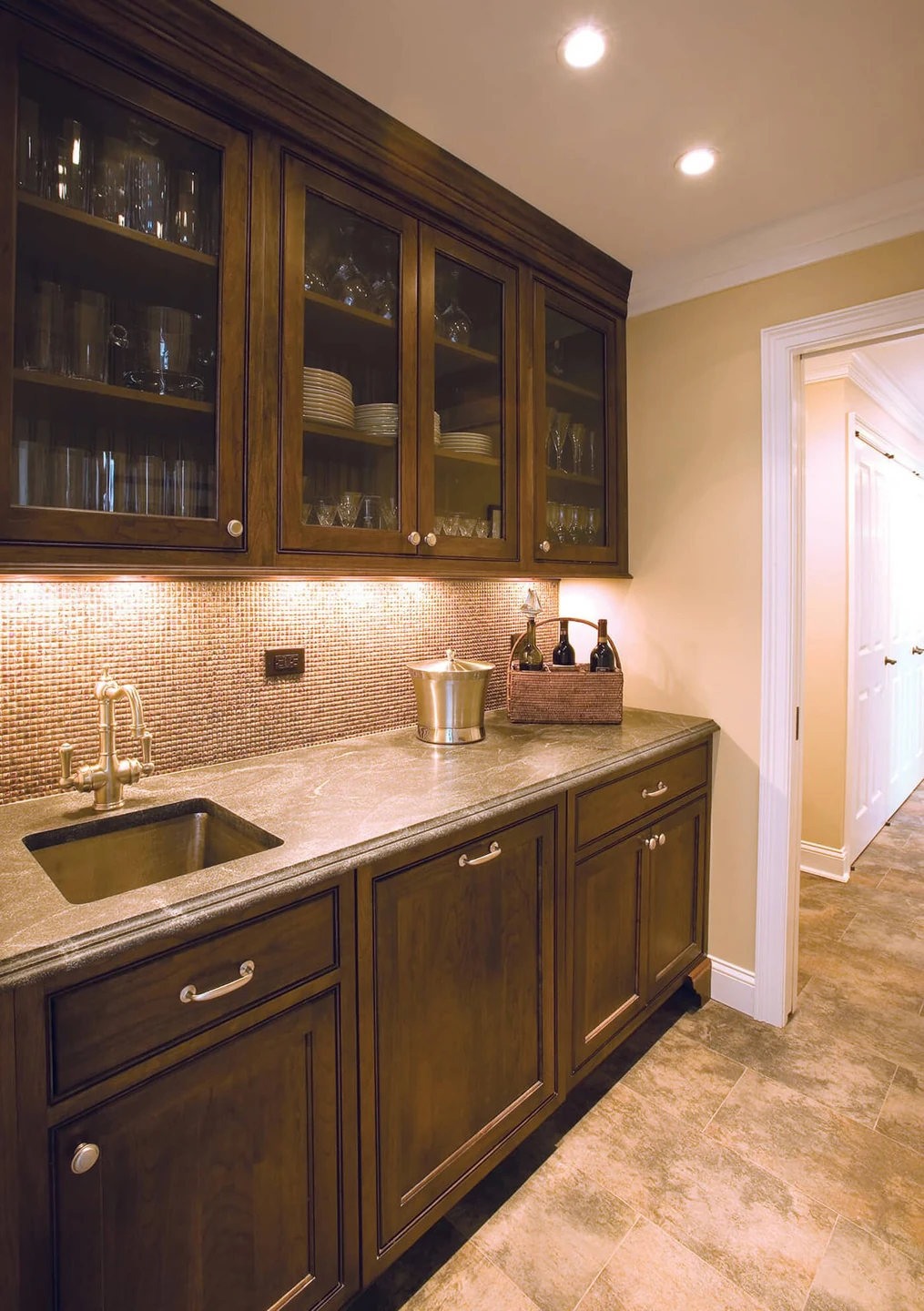
What is a Butler’s Pantry?
A butler’s pantry, also known as a scullery, is an intermediary room, or area, between a kitchen and a dining room designed for storage, staging, and additional workspace. They were traditionally found within large homes but increasingly, more homeowners are opting for this smart storage solution. A butler’s pantry serves two main purposes: storage and staging.
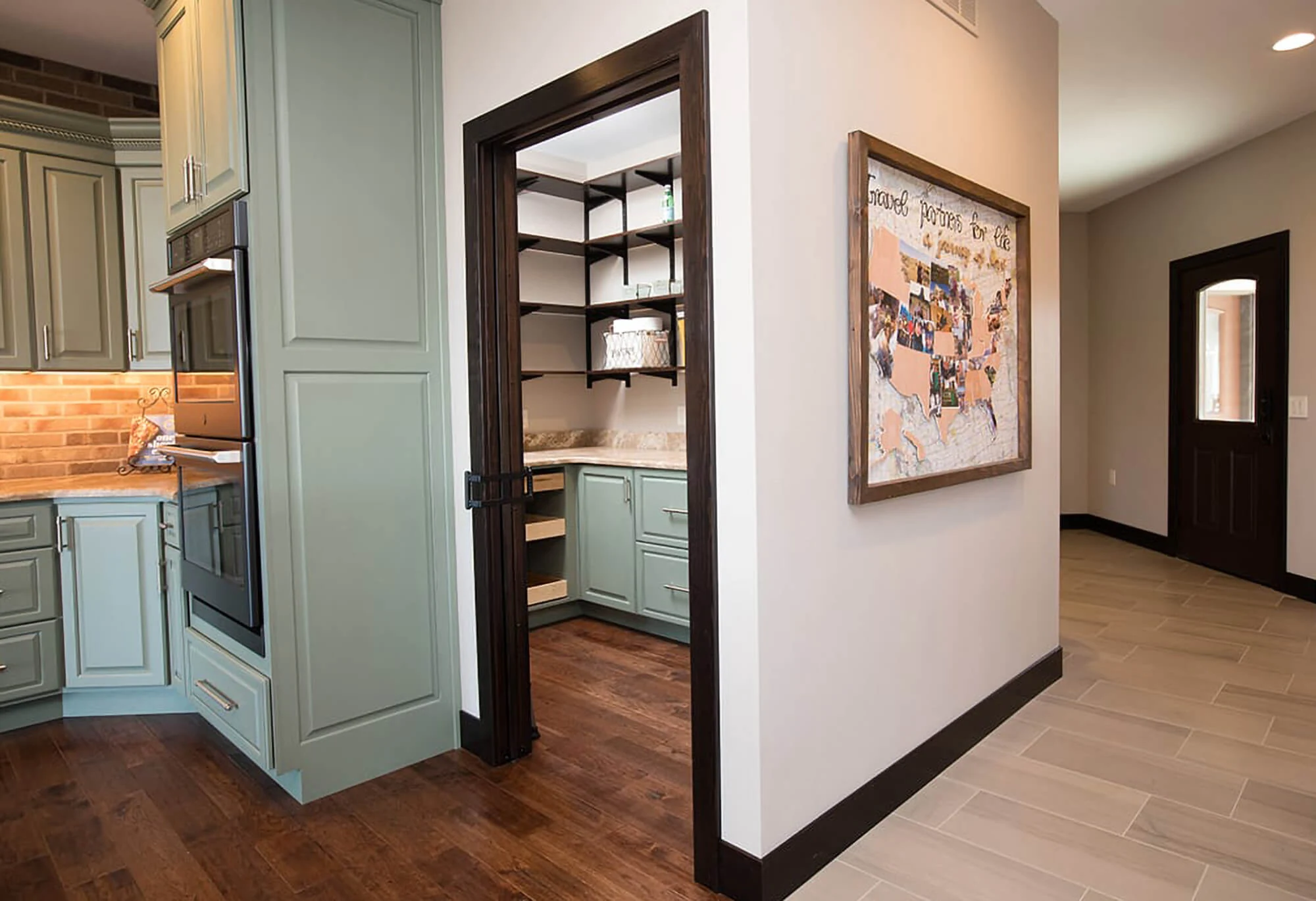
Standford door style in the “Sage” painted finish.
First, a butler’s pantry can store any kitchen items you’d like to hide away from sight in your kitchen — especially in a home with an open floor plan. Think of silverware, fine china, platters, wine glasses, table linens, candles, and small appliances like can openers, blenders, and crock pots. In addition to traditional pantry staples, canned goods, snacks, and baking supplies, a butler’s pantry can store various other cooking and dining items all within one dedicated space. It is also a great place to store wine, as well as tea and coffee-making appliances.
Secondly, the butler’s pantry serves as a staging area for meals outside of the kitchen. Butler’s pantries often have usable counter space inside making it an ideal area for prepping meals. It’s also a place to put already finished entrees while waiting for the rest of your meal to finish cooking. This not only saves on precious counter space but reduces foot traffic through the kitchen.
What Is the Difference Between a Butler’s Pantry and a Pantry?
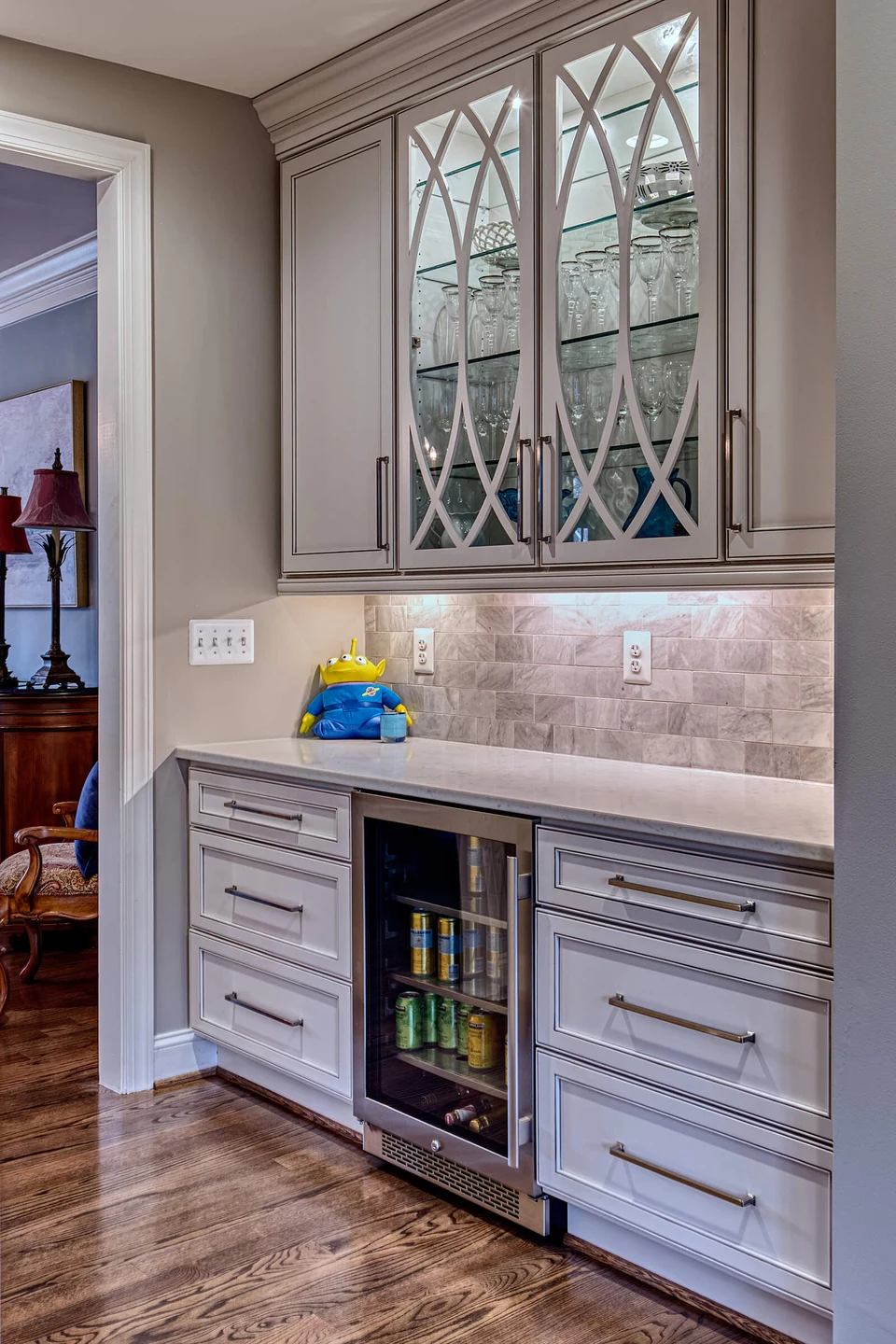
Door Style: Sonoma | Wood: Paintable | Paint: Polar | Accent Door: Bernini Mullion Door Accent
A traditional pantry is mainly used for food storage, while a butler’s pantry is designed for both storage and workspace. In addition to pantry goods, a butler’s pantry often includes countertops, cabinetry, and space for serving ware, beverage stations, or small appliances.
A butler’s pantry can store serving dishes, glassware, table linens, coffee or tea appliances, wine storage, small kitchen appliances, pantry staples, and entertaining essentials. Many homeowners also use it as a place for meal staging, prep space, or a beverage station.
What are Butler’s Pantries used for today?
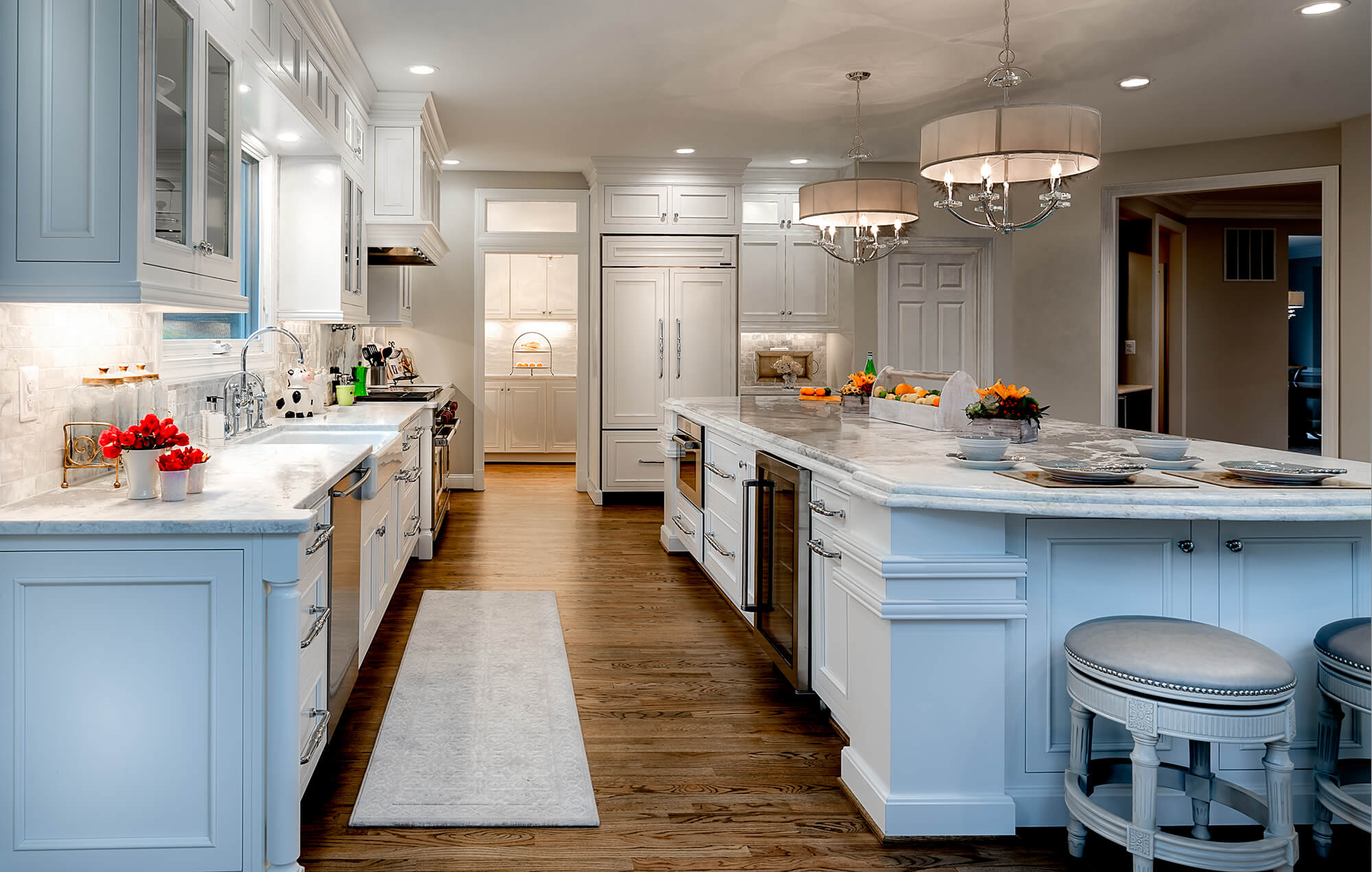
Most families today with butler’s pantries do not have butlers, let alone butlers who live inside their kitchen pantry. Yet that doesn’t mean butler’s pantries are a relic of the past! In fact, there is a resurgent interest in butler’s pantries in the marketplace, with over 60% of new buyers claiming they want the enhanced pantry storage space that a butler’s pantry offers.
Today, a butler’s pantry is used as an extension of the kitchen. Homeowners often use it for extra storage, meal staging, countertop workspace, beverage prep, and housing small appliances like coffee makers, electric kettles, blenders, or air fryers. In homes with open layouts, a butler’s pantry can also help keep the main kitchen looking cleaner and more organized.
How to Plan a Butler’s Pantry in Your New Kitchen
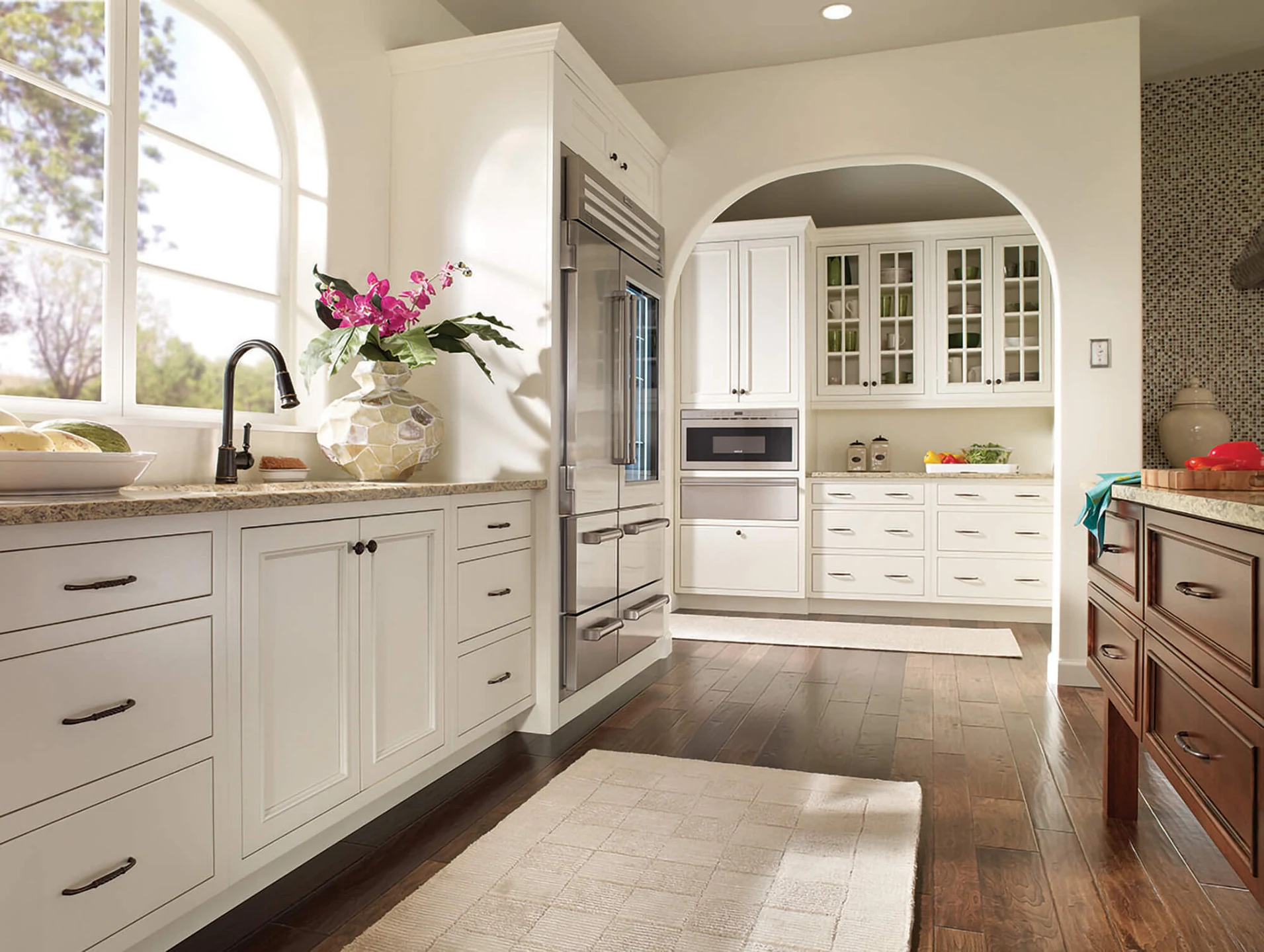
When planning a butler’s pantry, think first about how you want the space to function. Some homeowners prioritize concealed storage, while others want prep space, a beverage station, or a place to keep small appliances off the main kitchen counters. Cabinetry, shelving, durable countertops, and easy access between the kitchen and dining area can all make the space more useful.
Popular butler’s pantry ideas include floor-to-ceiling cabinetry, open display shelving, built-in beverage storage, extra drawers for entertaining essentials, and designated zones for coffee, wine, or meal prep. A kitchen designer can help you tailor the layout to your home and routine. Explore Bertch kitchen cabinets for inspiration here.
Butler’s Pantry Ideas for Storage, Style, and Function
Popular butler’s pantry ideas include:
- Floor-to-ceiling cabinetry
- Open shelving for display pieces
- Countertop space for prep or serving
- Built-in beverage storage
- Dedicated zones for coffee, wine, or entertaining essentials
The right design depends on how you cook, host, and use your kitchen every day.
Where did Butler’s Pantries originate?
Sometime during Victorian Era England (mid-1800’s – early 1900’s), the butler’s pantry fell into vogue among individuals with larger homes. At the time, particularly well-to-do families had a butler in their employ, and at times the butler was given free boarding within the family’s home so that they would be available to cater to the family at all times. The butler’s room was often within the pantry, hence the name!
In addition to serving as the living quarters for the family butler, as well as an additional prepping and storage area located outside of the kitchen, the butler’s pantry also contained a logbook managed by the family’s butler. This logbook was used to keep an inventory of the family’s wine stock and keep tabs on who drank which bottle.
Conclusion
If you’re planning a new kitchen or remodeling an existing one, a butler’s pantry can add valuable storage, prep space, and everyday functionality. Whether you want a dedicated entertaining zone, a hidden home for small appliances, or simply more room to stay organized, a kitchen designer can help you plan the right cabinetry layout for your space. Explore more kitchen design inspiration from Bertch, or find a showroom to start planning your butler’s pantry.